Mycelium Bound Composites
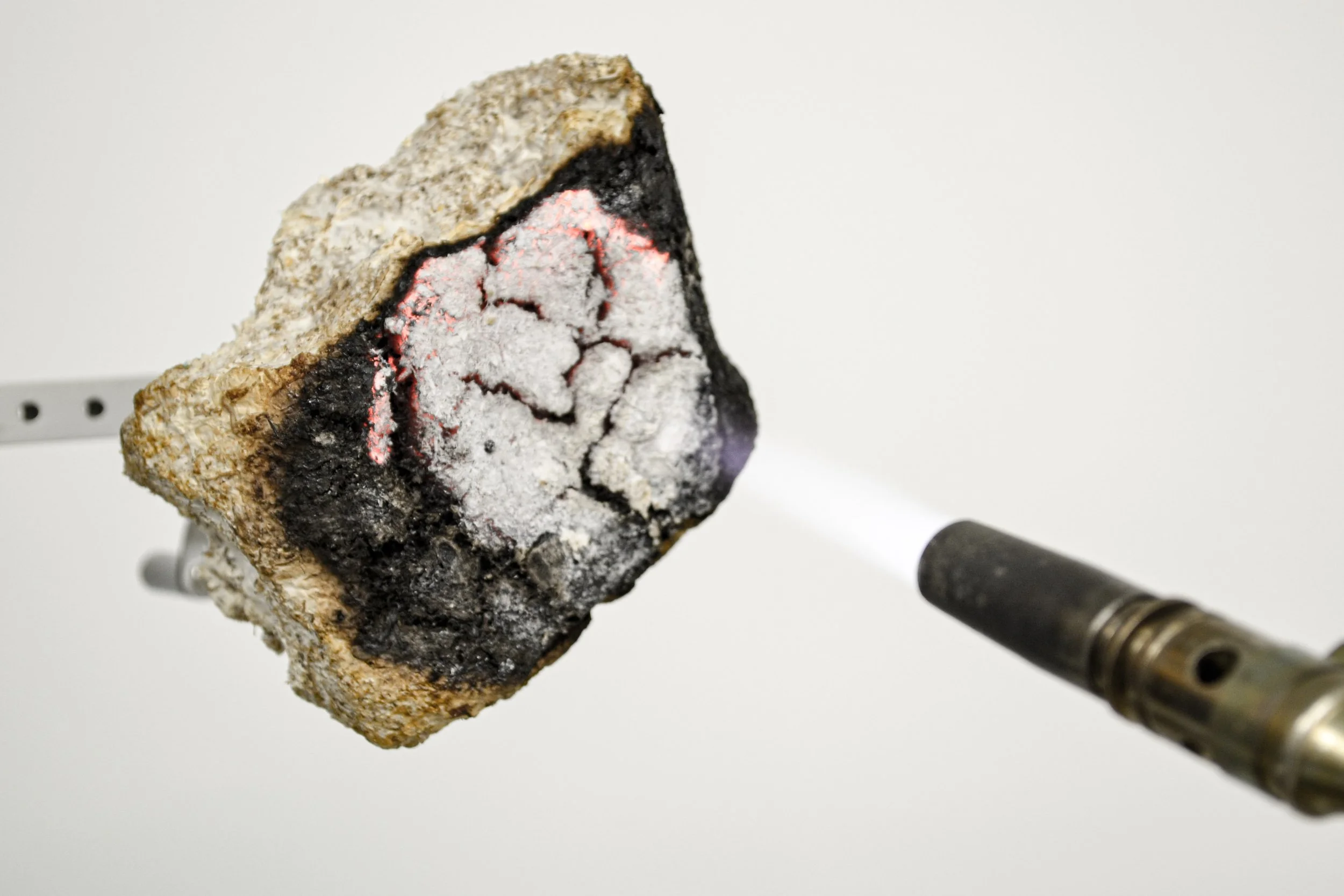
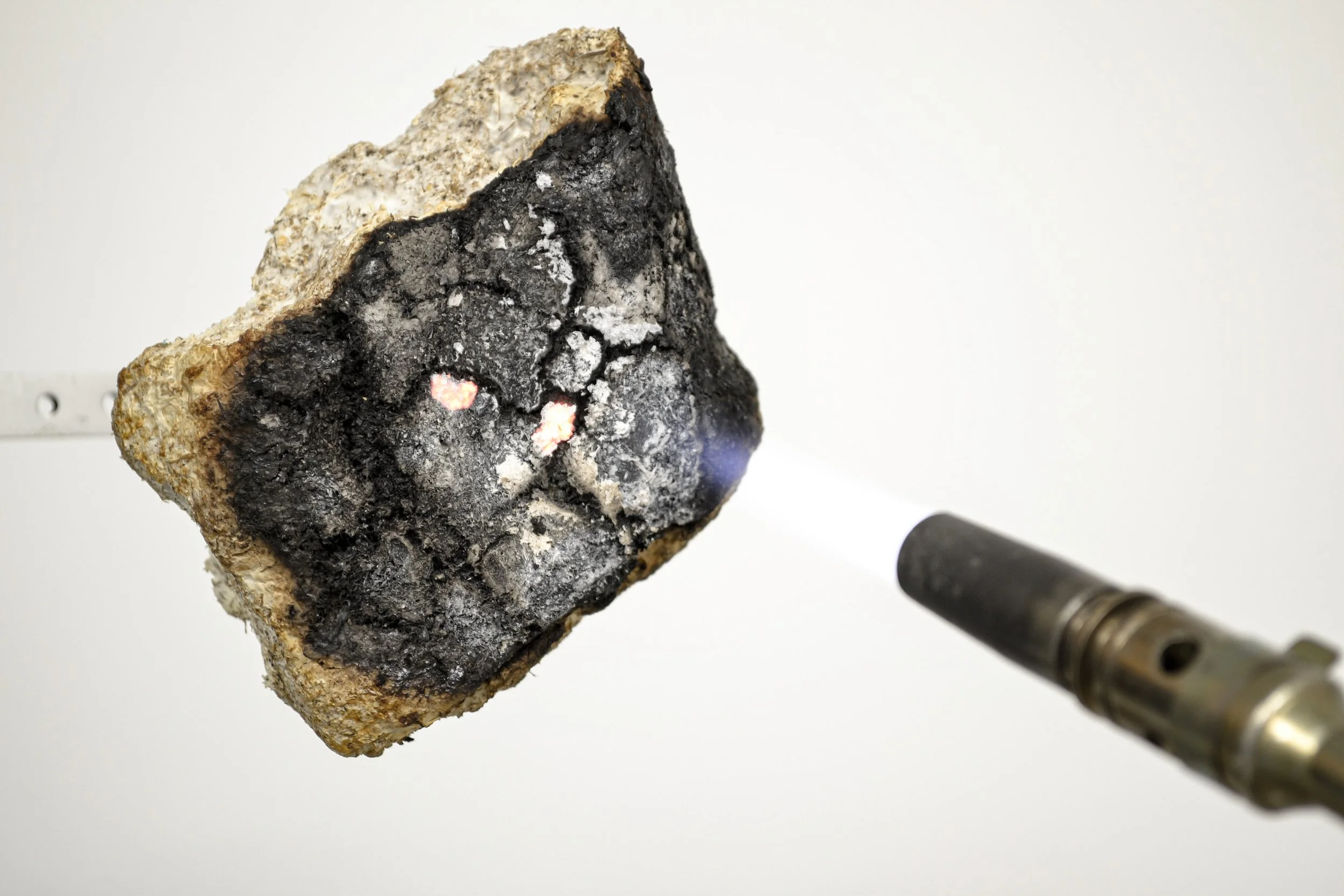
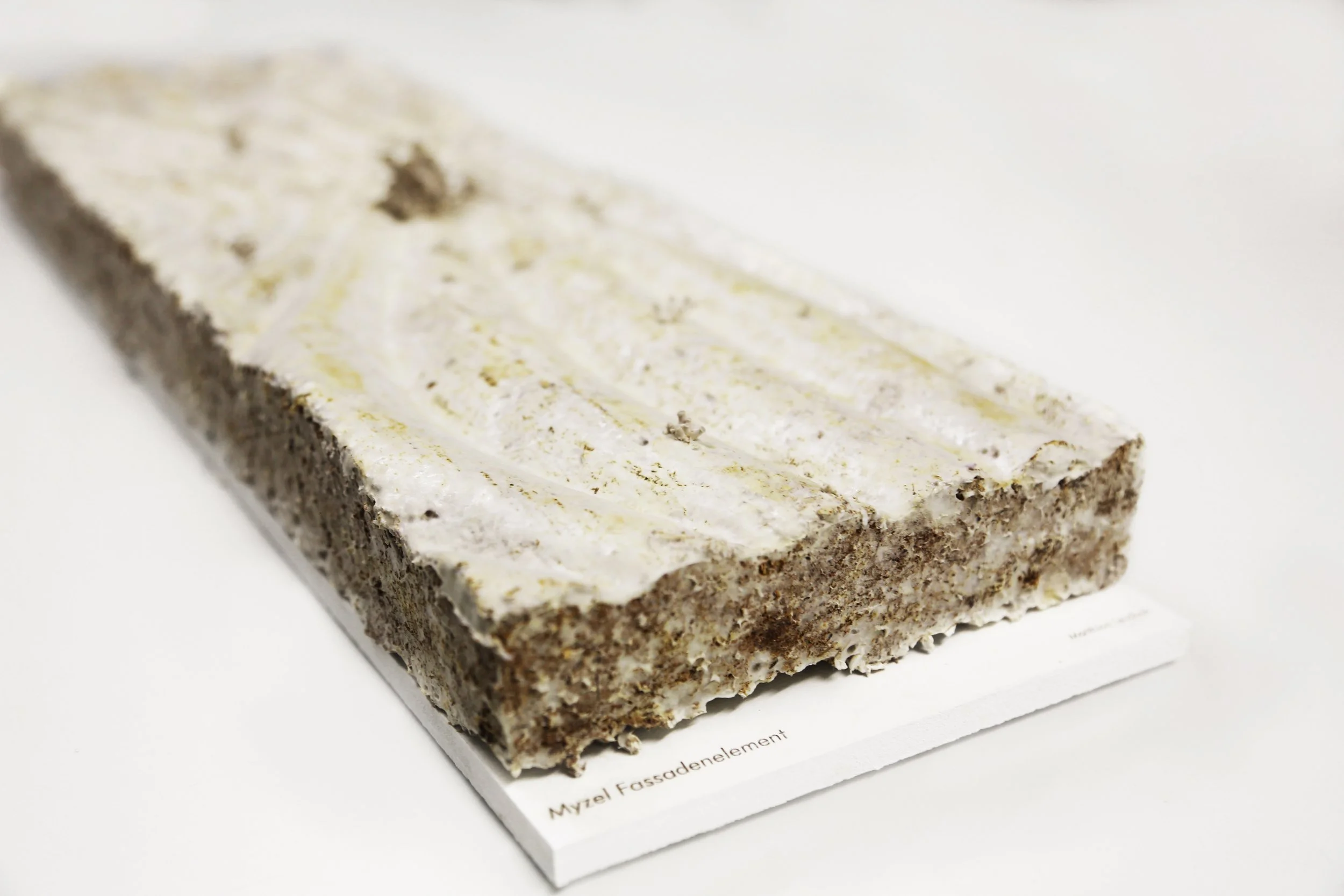
Mycelium bound composites (MBC) are grown locally from lignocellulosic agricultural waste, are fully biodegradable at end of life, lightweight, and thermally performant. However, their compressive strength is low compared with established construction materials, which confines them to non-structural application. Wider use requires structurally informed, bespoke geometry — and bespoke geometry requires bespoke formwork. The work begins at KIT with the characterisation of the material and the first two formwork strategies, continues at ETH Zurich with a dissolving formwork and a column at architectural scale, and treats the printed formwork throughout as the design variable: three polymers tested for how a growing organism interacts with the mould that shapes it.
Period
2014-2022
CONTEXT
Material characterisation and small scale 3D printed formworks: diploma thesis, Building Lifecycle Management, Karlsruher Institut für Technologie, 2014/15.
Large-scale 3D Printed formwork: Chair of Digital Building Technologies, ETH Zurich. The Living Column originated as the MAS Digital Fabrication thesis, 2017.
PUBLICATIONS
Leschok, Matthias, and Benjamin Dillenburger. 2022. “3D Printed Formwork for Mycelium Bound Composites.” In Proceedings of the 42nd ACADIA Conference, edited by Masoud Akbarzadeh, Dorit Aviv, Hina Jamelle, and Robert Stuart-Smith, 356–65. University of Pennsylvania, Philadelphia, PA. doi.org/10.3929/ethz-b-000643544
Leschok, Matthias. 2015. Myzel — Responsive Architektur. Diploma thesis, Karlsruher Institut für Technologie, Fachgebiet Building Lifecycle Management
RECOGNITION
Sparkassenumweltpreis, 2015 — for the diploma thesis Myzel, responsive Architektur
Finalist, 3D Pioneers Challenge 2016 — design competition for additive manufacturing, Erfurt
MATERIAL CHARACTERISATION
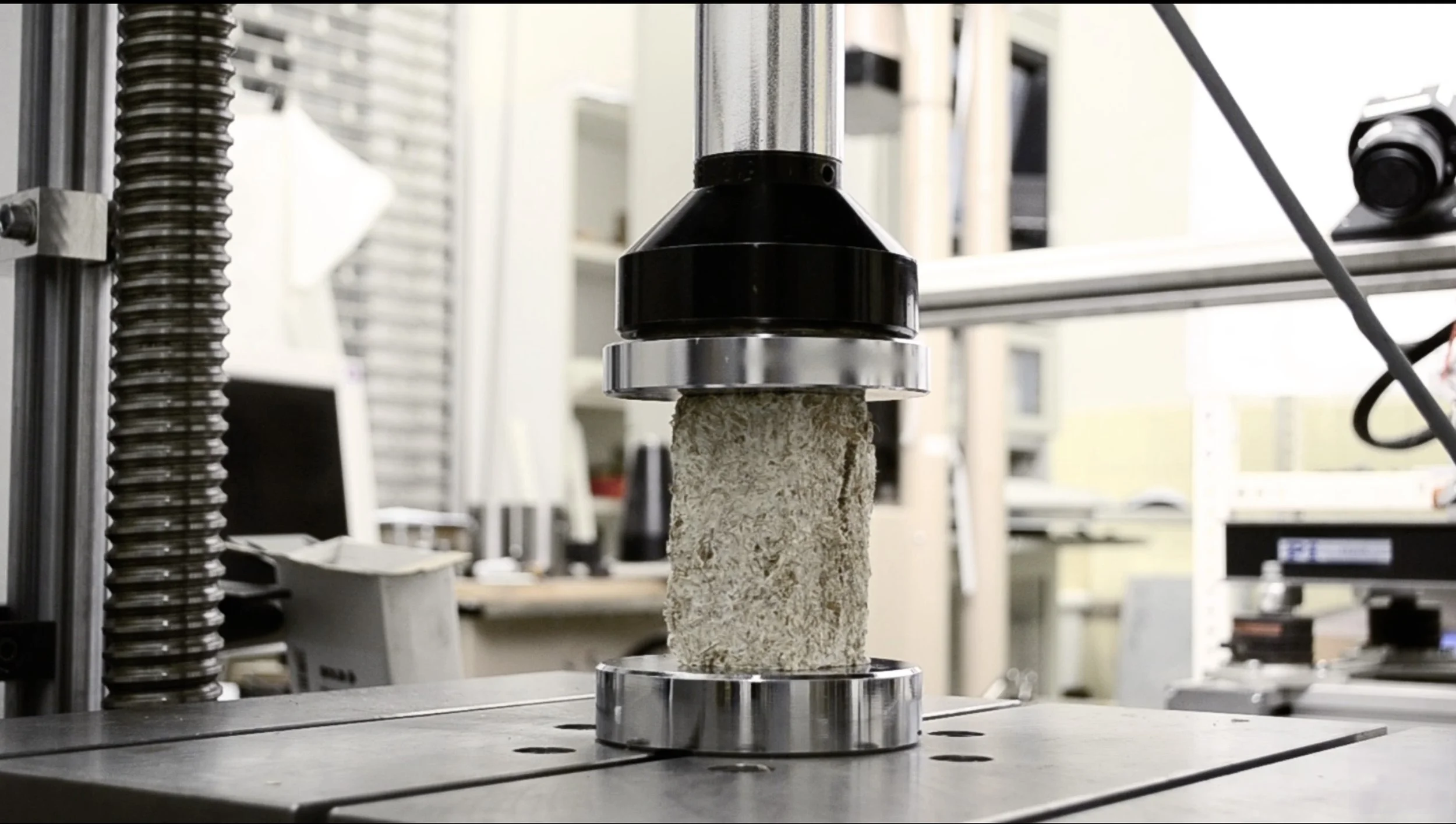
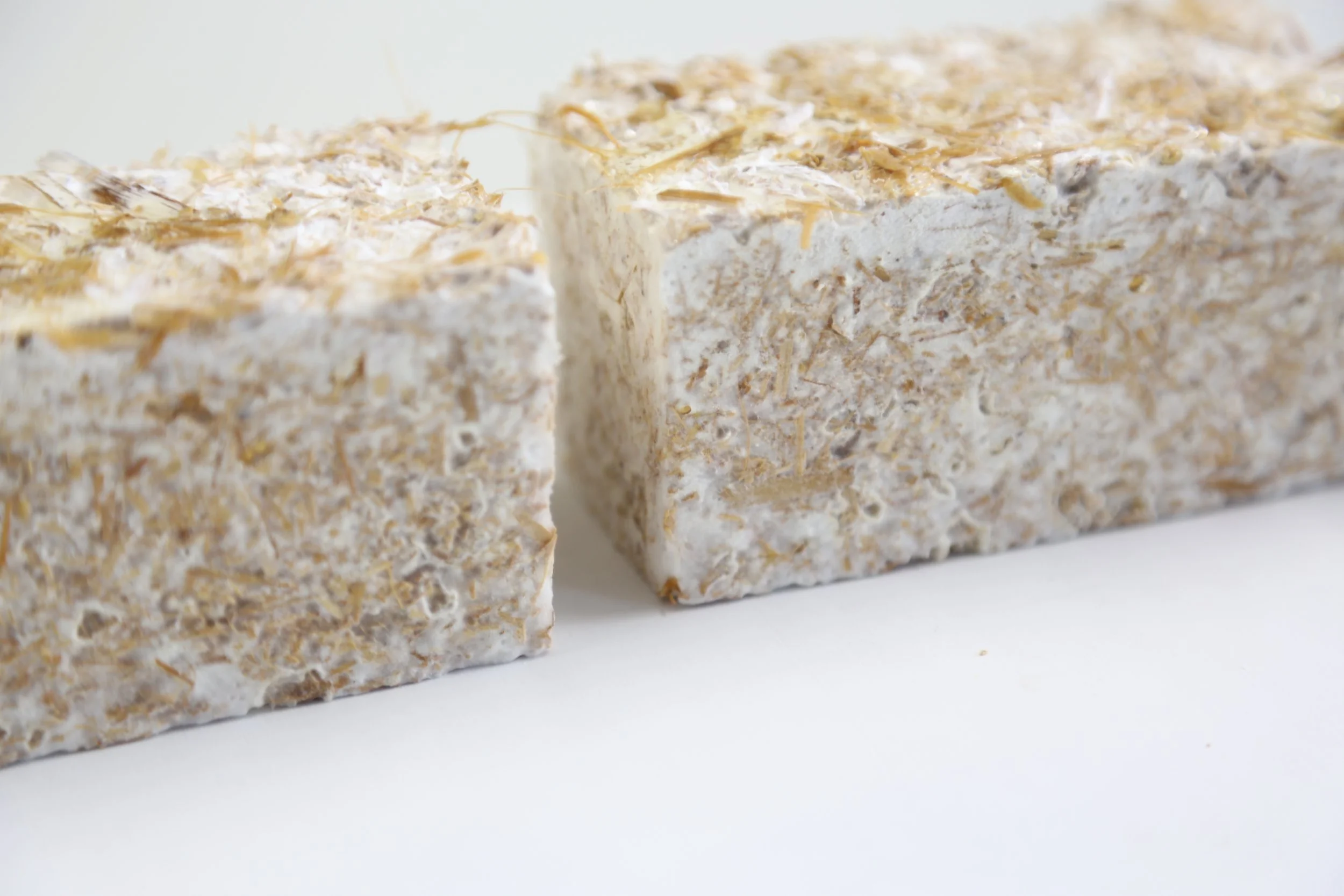
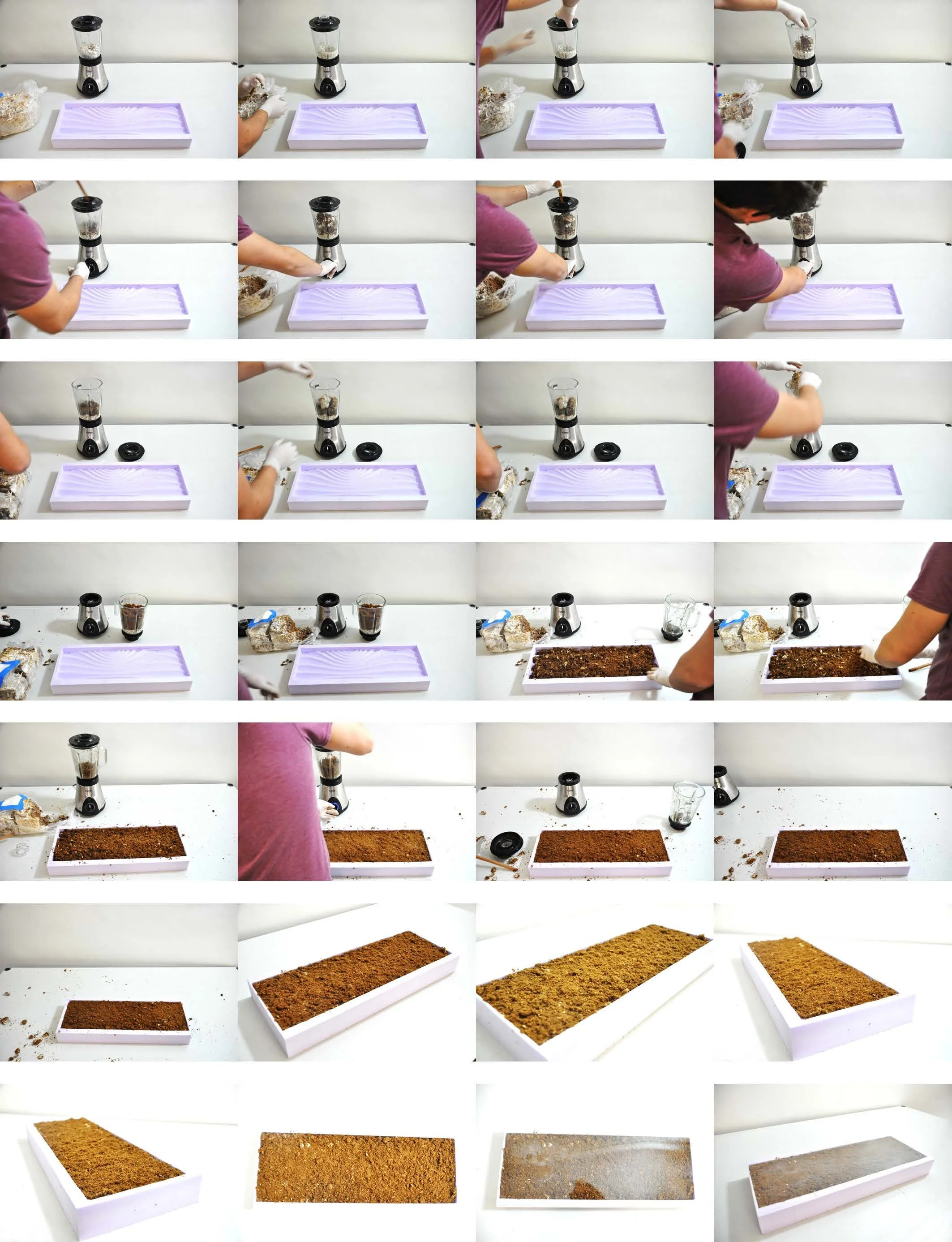
Compression behaviour of fully grown mycelium blocks is established according to DIN EN 826 — the standard for thermal insulating products, chosen because grown mycelium reaches U-values comparable to expanded polystyrene. Ten specimens of 5 × 5 × 10 cm are loaded at 1 mm/min with their bearing faces ground flat, as the material warpes as it dries: five grown individually to size, five cut from a single large block.
Individually grown specimens reach a mean of 0.29 kN over a 2500 mm² base area — approximately 0.12 N/mm² — against 0.24 kN, or 0.10 N/mm², for specimens cut from a block. An F-test rejects equal variances between the two groups at p = 0.0077: grown blocks are stronger on average but considerably less consistent, which makes the production route a structural decision rather than a manufacturing convenience.
The sample is small, and the influence of substrate mixture, grind and compaction on compressive strength remains untested.
Myzel — Responsive Architektur · Diploma thesis, Karlsruher Institut für Technologie, Building Lifecycle Management, 2014/15
IMPERMEABLE FORMWORK — PLA
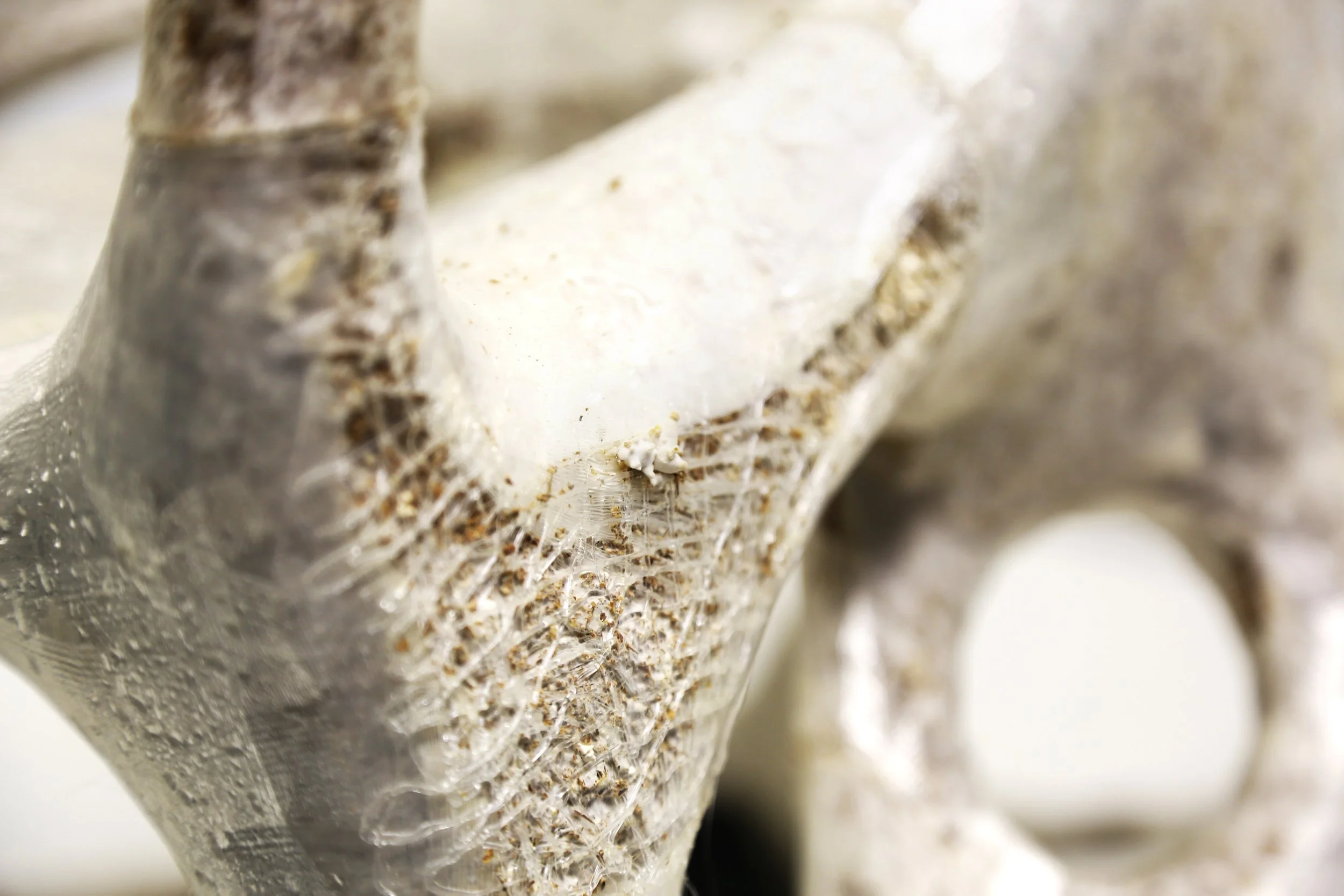
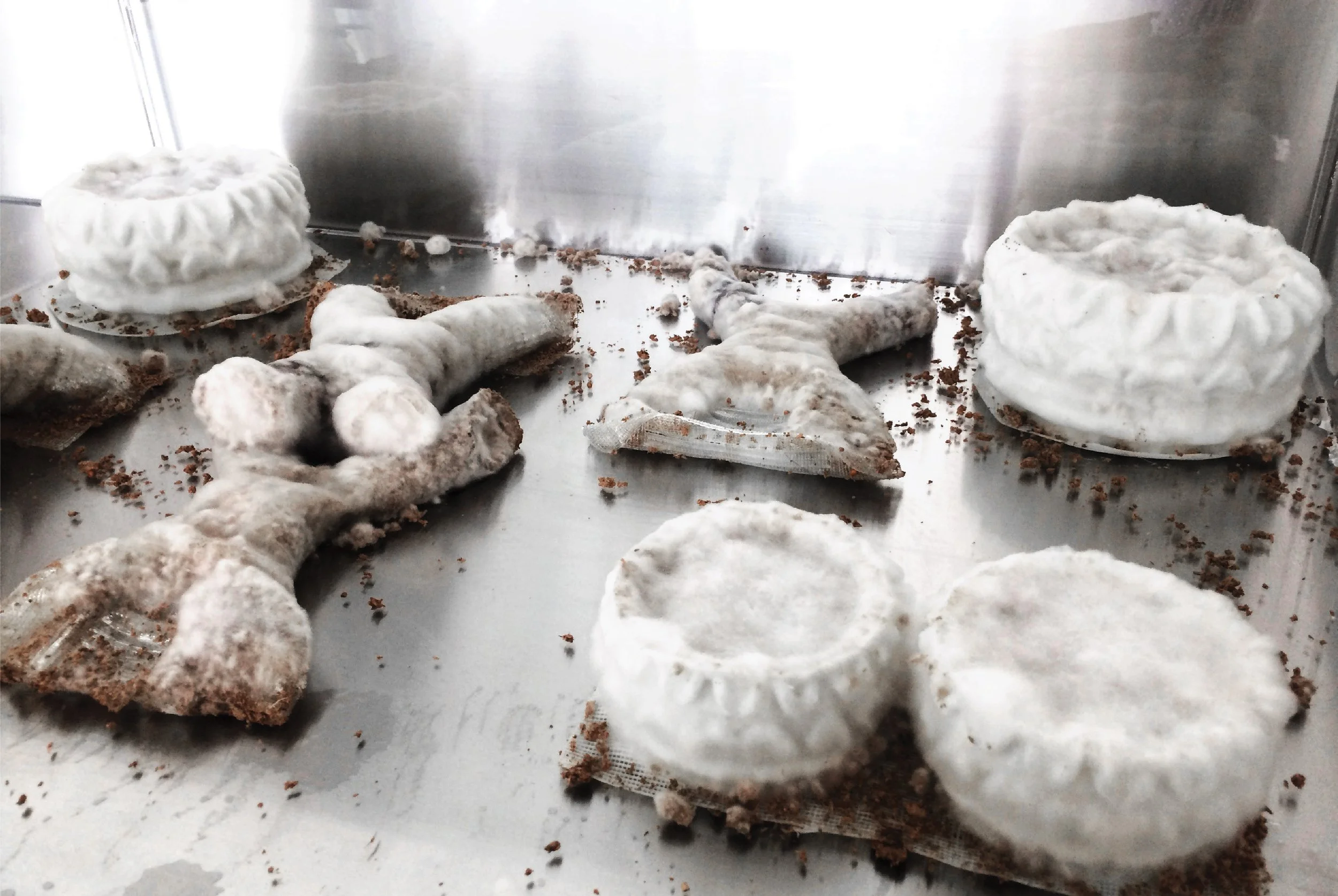
As shown in experiments, mycelium does not grow through 3DP PLA, however, the organism needs oxygen to colonise the substrate. An impermeable formwork therefore leaves two options: remove it once growth is complete, or build the openings for gas exchange into it from the start.
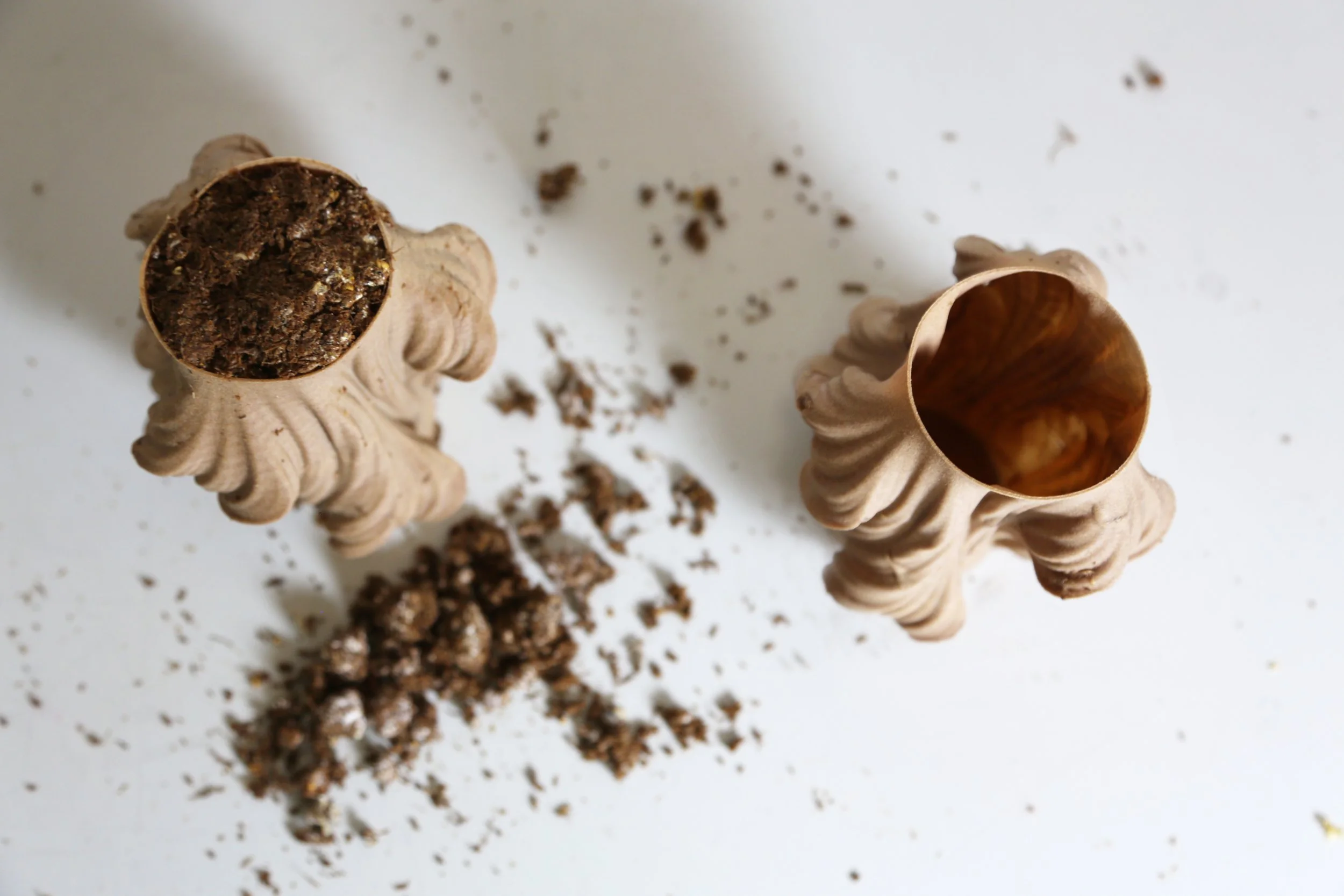
The MycoChair takes the second route. Its formwork is segmented into 45 pieces to fit the build volume of the printers (300 × 300 × 600 mm), printed as single-shell objects including perforated areas to admit air, sterilised, and filled with moist substrate. The assembly grows inside an outer layer of foil, which holds the humidity colonisation requires. After roughly 30 days the foil is removed and the piece is dried: drying is what ends growth and consolidates the component. The PLA shells stays in place, and forms together with the mycellium a lightweight biocomposite.
Myzel — Responsive Architektur · Diploma thesis, Karlsruher Institut für Technologie, Building Lifecycle Management, 2014/15
PERMEABLE FORMWORK — LAYWOOD

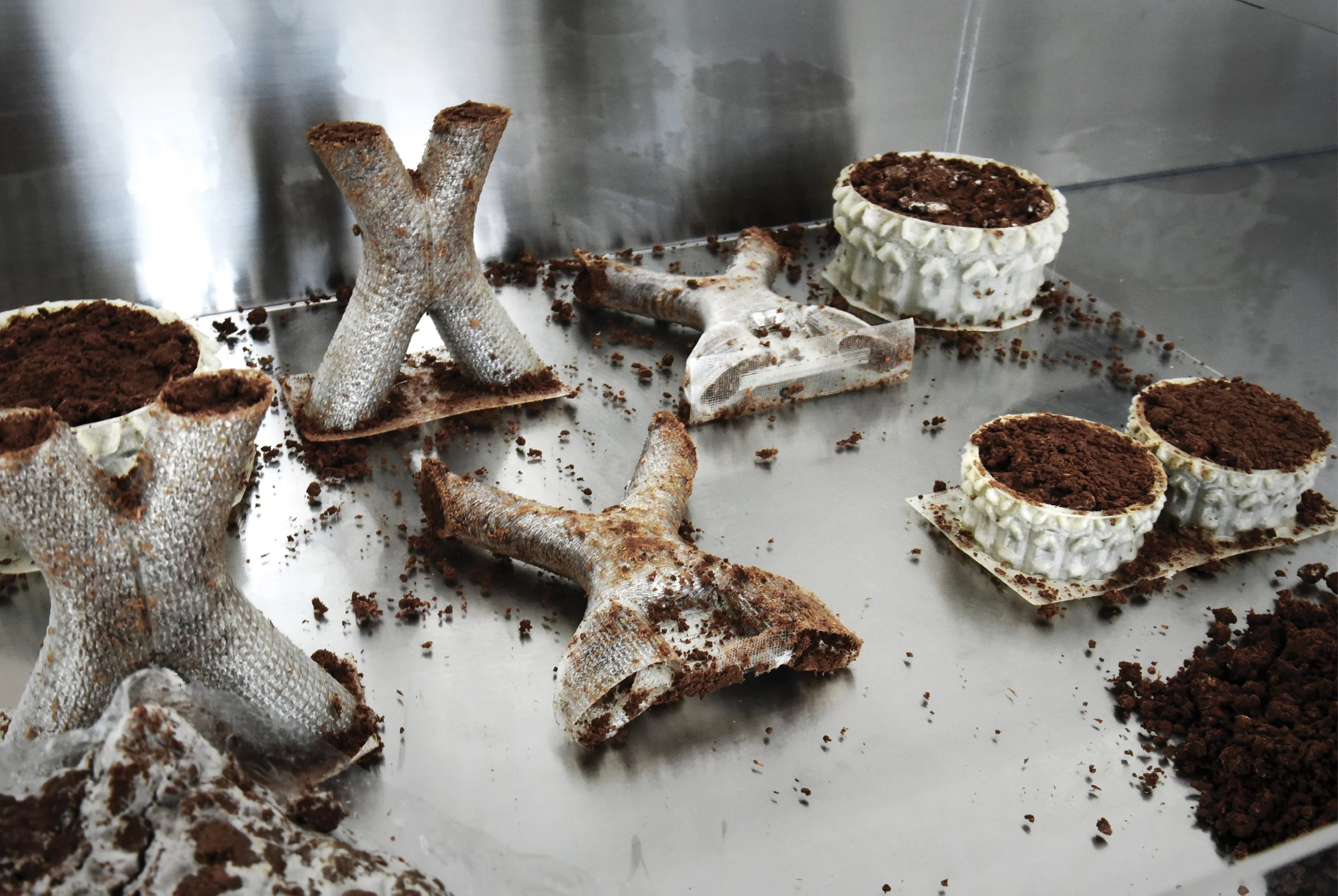
Laywood is a polymer composite with a cellulose content of approximately 40%. Because its base material is lignocellulose — the same base as the mycelium substrate — the mycelium is not repelled and grows through the printed wall. The formwork therefore stays in place and becomes part of the component, lifting the constraint that shapes most printed formwork: the geometry no longer has to be demouldable, so undercuts and closed cavities become available.
3D printed formwork for mycelium bound composites · ACADIA 2022: Hybrids & Haecceities (New Ecologies I: Biomaterials), 356–365
DISSOLVING FORMWORK — PVA
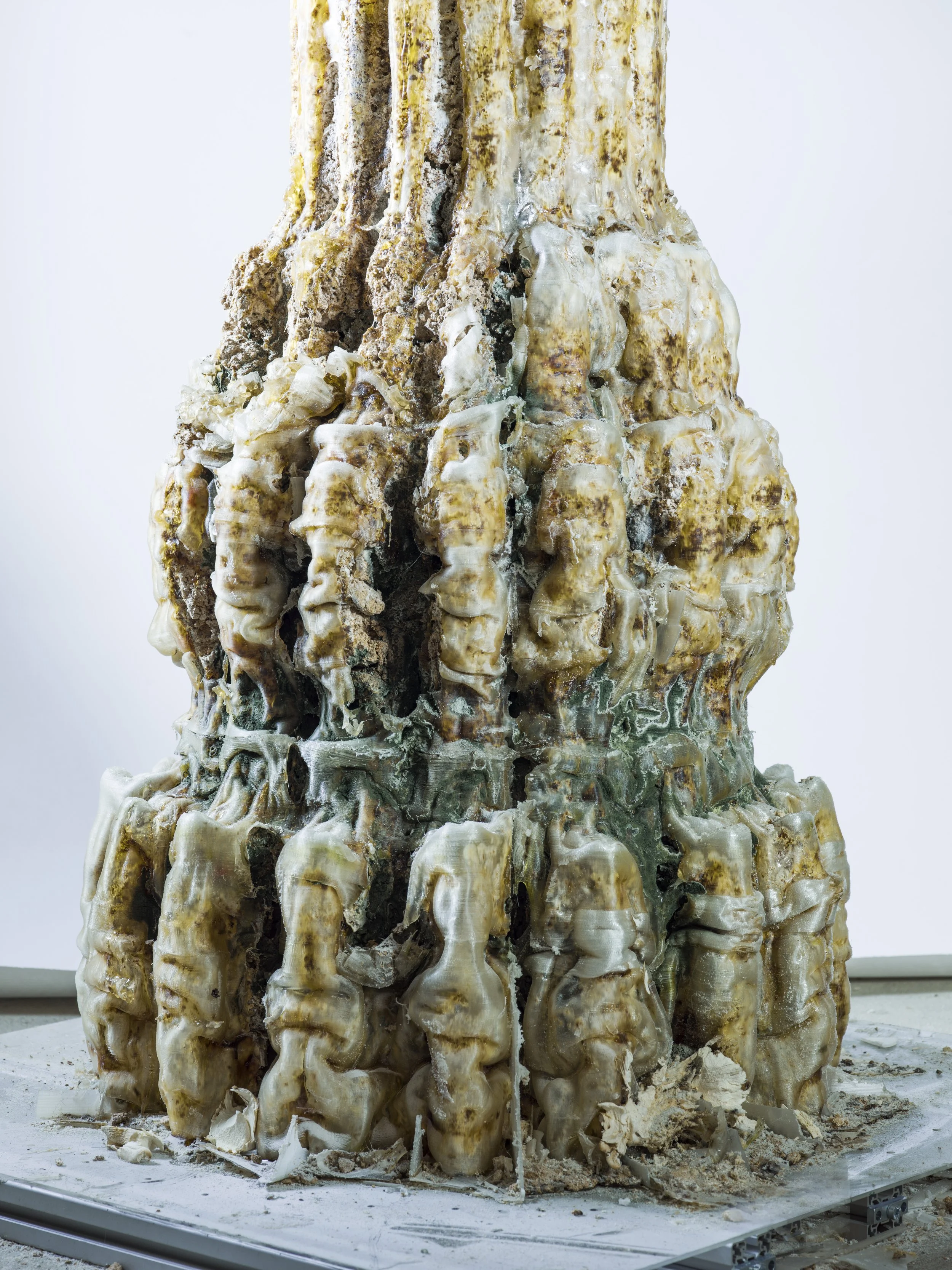
Wall thickness has to satisfy two opposing requirements: thick enough to shape the substrate throughout the growth period and to survive the moisture the organism needs until the composite has consolidated, and thin enough to dissolve once it has. The Living Column — 2.5 m, 150 litres of substrate packed into water-dissolvable printed formwork — grades thickness by position, from 3 mm at the base to 0.8 mm at the top.
At 0.8 mm the formwork does both: it survives long enough for the upper sections to be shaped correctly, then dissolves and exposes the MBC. At 3 mm the formwork doesn’t dissolves and remains as a unwanted skin. Infection on the column is traced to the pasteurised substrate and the uncontrolled growing environment rather than to the formwork.
3D printed formwork for mycelium bound composites · ACADIA 2022: Hybrids & Haecceities (New Ecologies I: Biomaterials), 356–365