Peer-reviewed research on large-scale additive manufacturing for the built environment — from the development of Hollow-Core 3D Printing to its structural, thermal and formwork applications, and to lightweight structures in bamboo and mycelium-bound composites. These selected papers are grouped by research line; all journal articles are open access.
HOLLOW-CORE 3D PRINTING
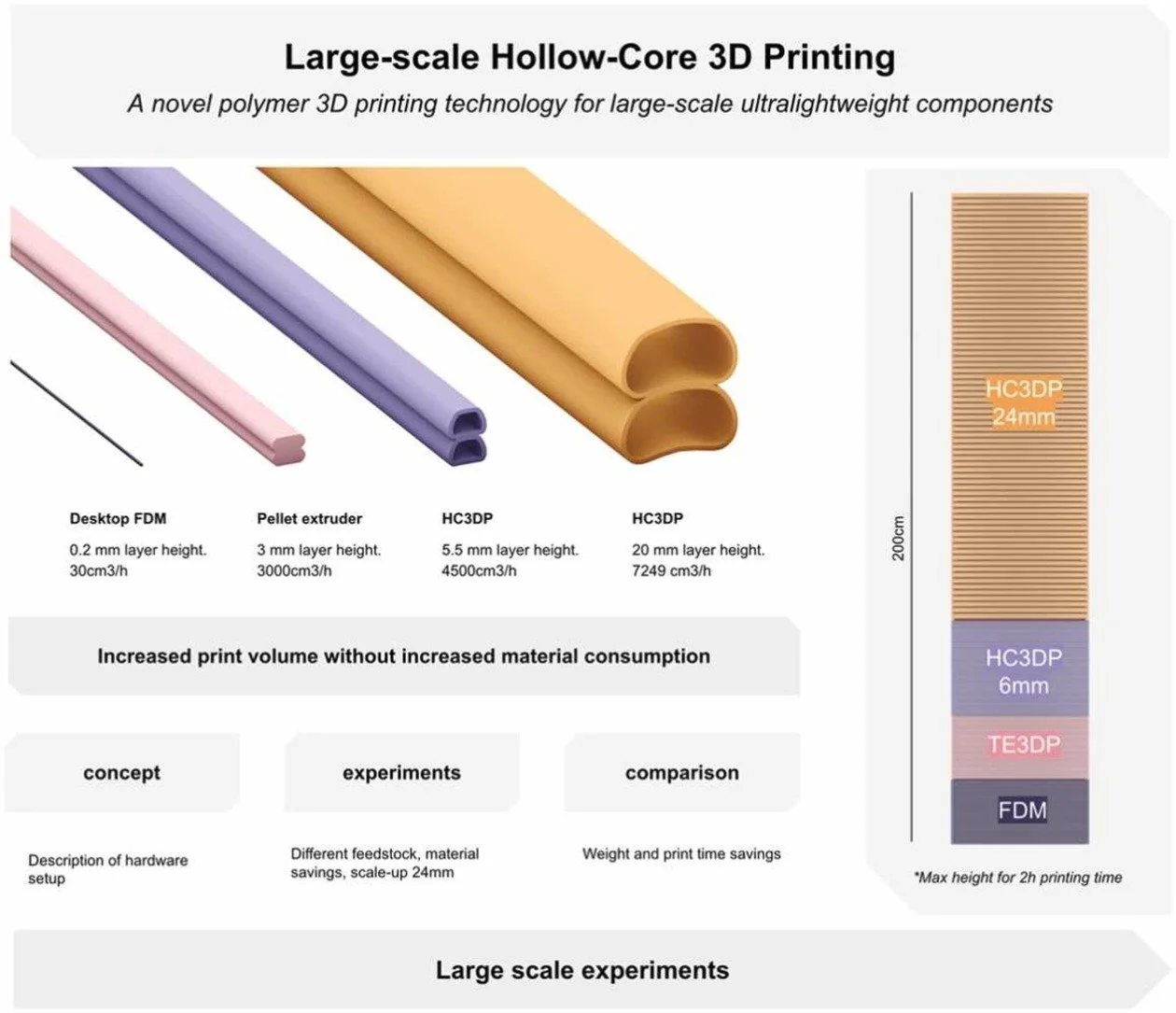
Large-scale hollow-core 3D printing (HC3DP): A polymer 3D printing technology for large-scale ultralightweight components
Additive Manufacturing 78 (2023) 103874
Leschok, Reiter, Dillenburger
Introduces HC3DP — hollow-bead pellet extrusion with regulated internal air pressure. Up to 84% material savings at an extrusion rate of 7250 mm³/s, more than ten times state-of-the-art pellet extrusion; 2 m columns printed in 1 h 54 min.

Large-scale hollow-core 3D printing: Variable cross-section and printing features for lightweight plastic elements
3D Printing and Additive Manufacturing 11(3) (2024) 907–918
Leschok, Kladeftira, Chan, Dillenburger
Layer height varied from 16 to 32 mm using a single nozzle, by internal air pressure alone; establishes the bridging, cantilever and non-planar limits of hollow-bead printing.
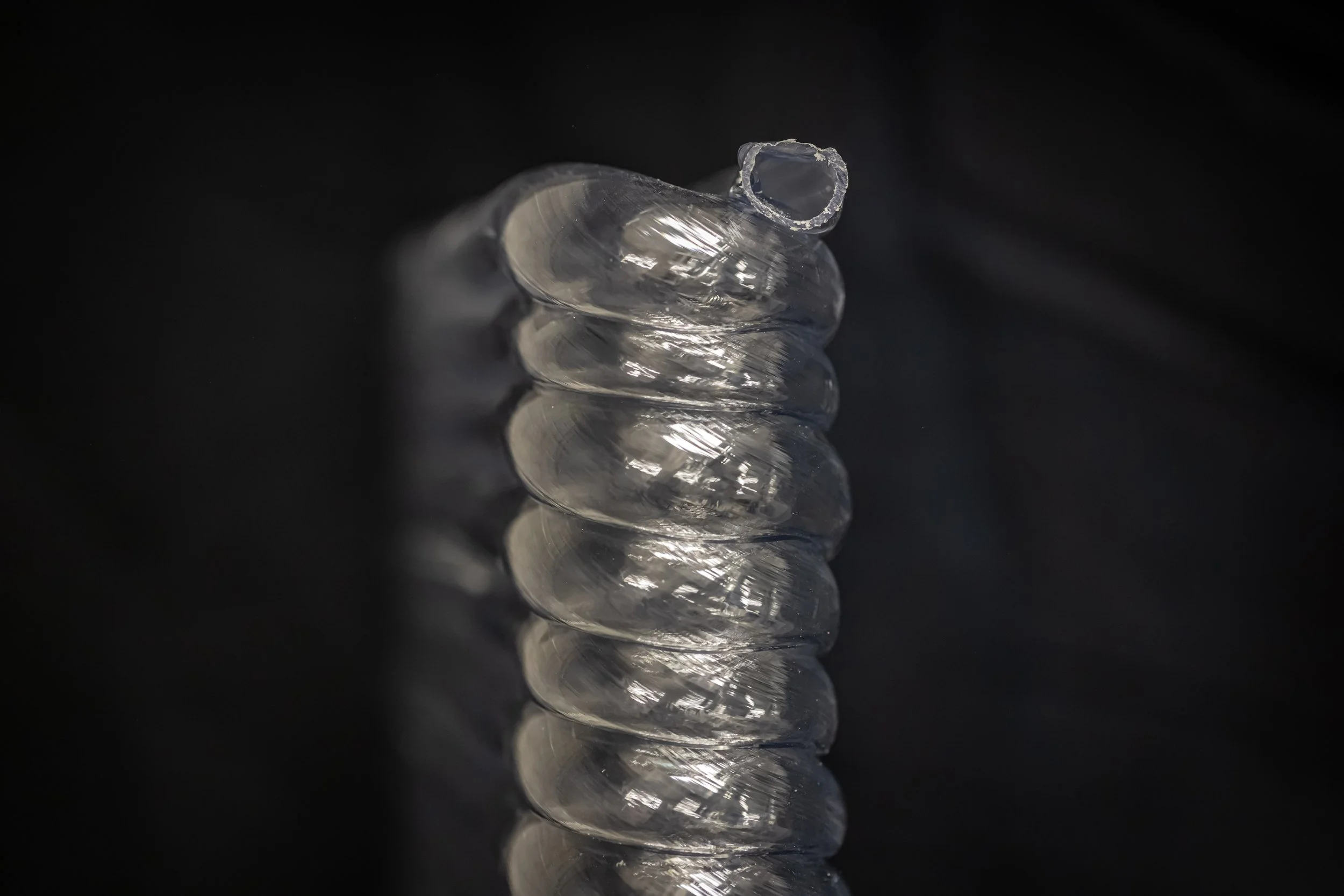
Thermal and manufacturing properties of hollow-core 3D-printed elements for lightweight facades
Developments in the Built Environment 19 (2024) 100485
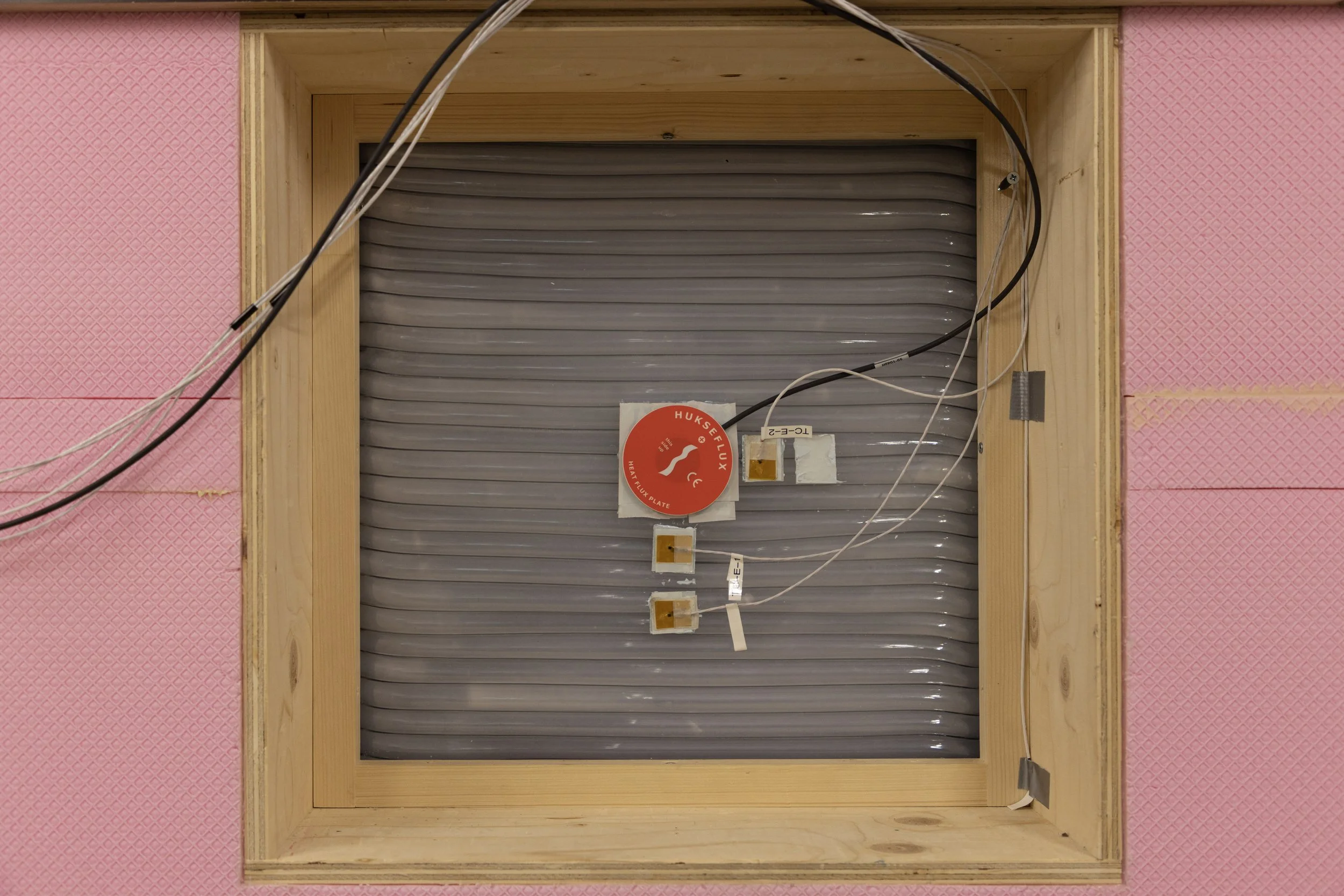
Hot-box measurement of printed facade panels: U = 0.88 W/m²K at 150 mm, and 0.85 W/m²K for a 75 mm aerogel-filled panel — comparable to triple glazing at 12.7 kg/m².
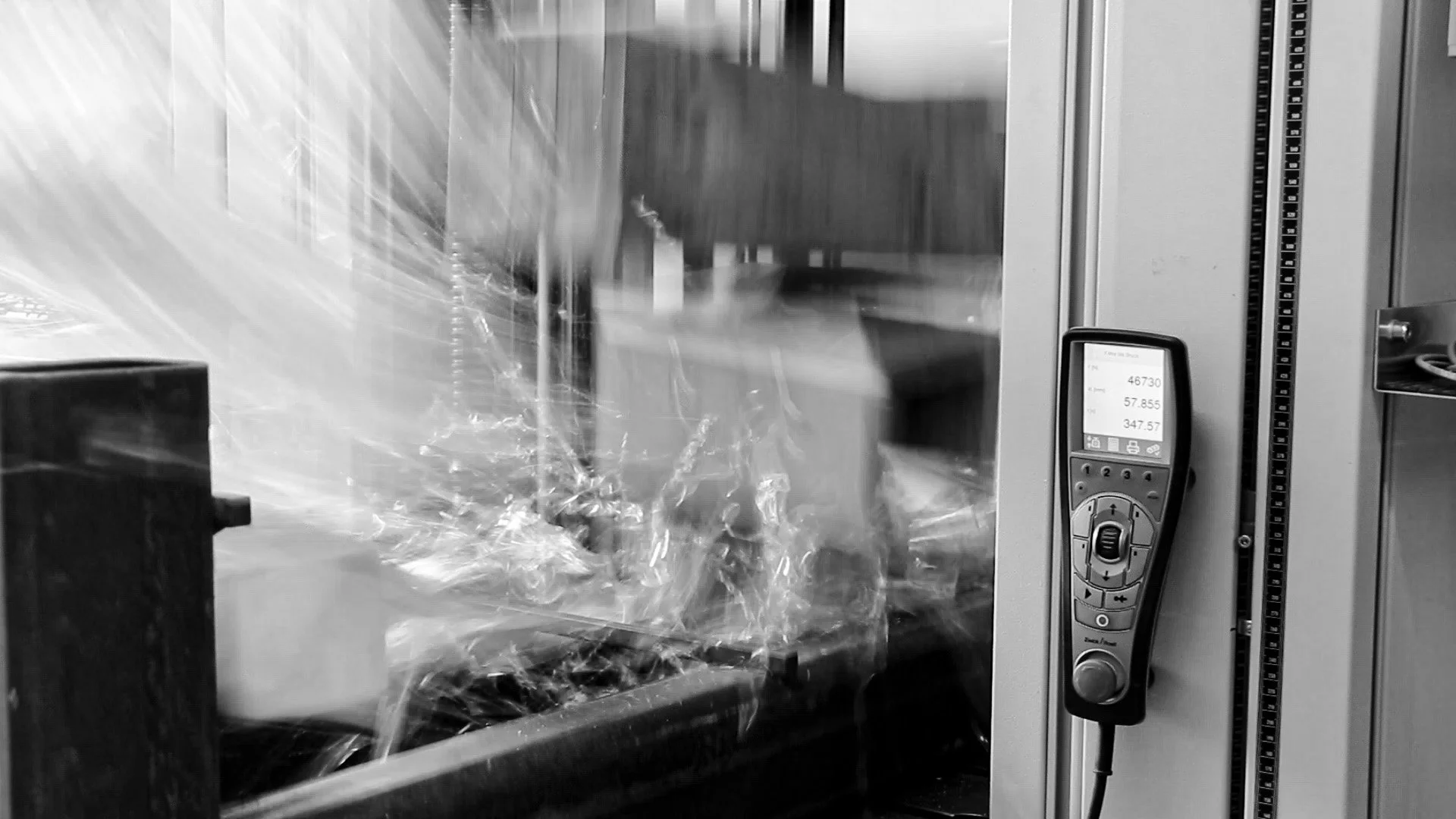
Material characterization and structural behaviour of HC3DP elements for lightweight facades
Tensile and four-point bending characterisation across temperatures and print orientations. Shifted-layer slicing raises beam capacity to 45.8 kN, supporting facade spans up to 12 m; identifies printing direction as the governing design decision.
Developments in the Built Environment 23 (2025) 100703
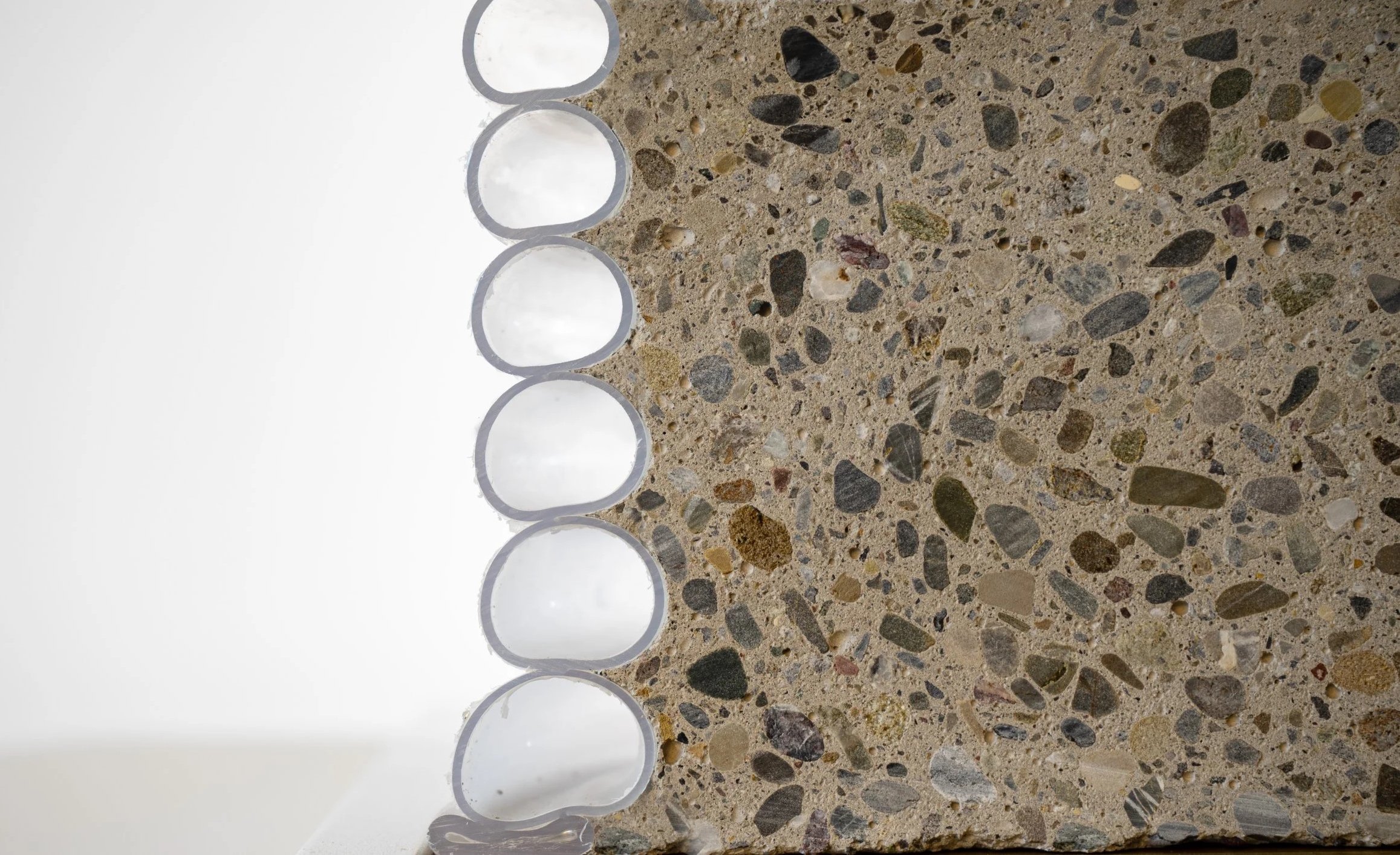
Hollow-core 3D printed formwork for bespoke concrete structures
ACADIA 2025: Computing for Resilience
Applies HC3DP to concrete formwork: a 2.1 m twisting column formwork printed in 3 h 57 min at 8.9 kg, resisting the full hydrostatic pressure of standard concrete mixes — three to ten times faster than comparable printed formworks.
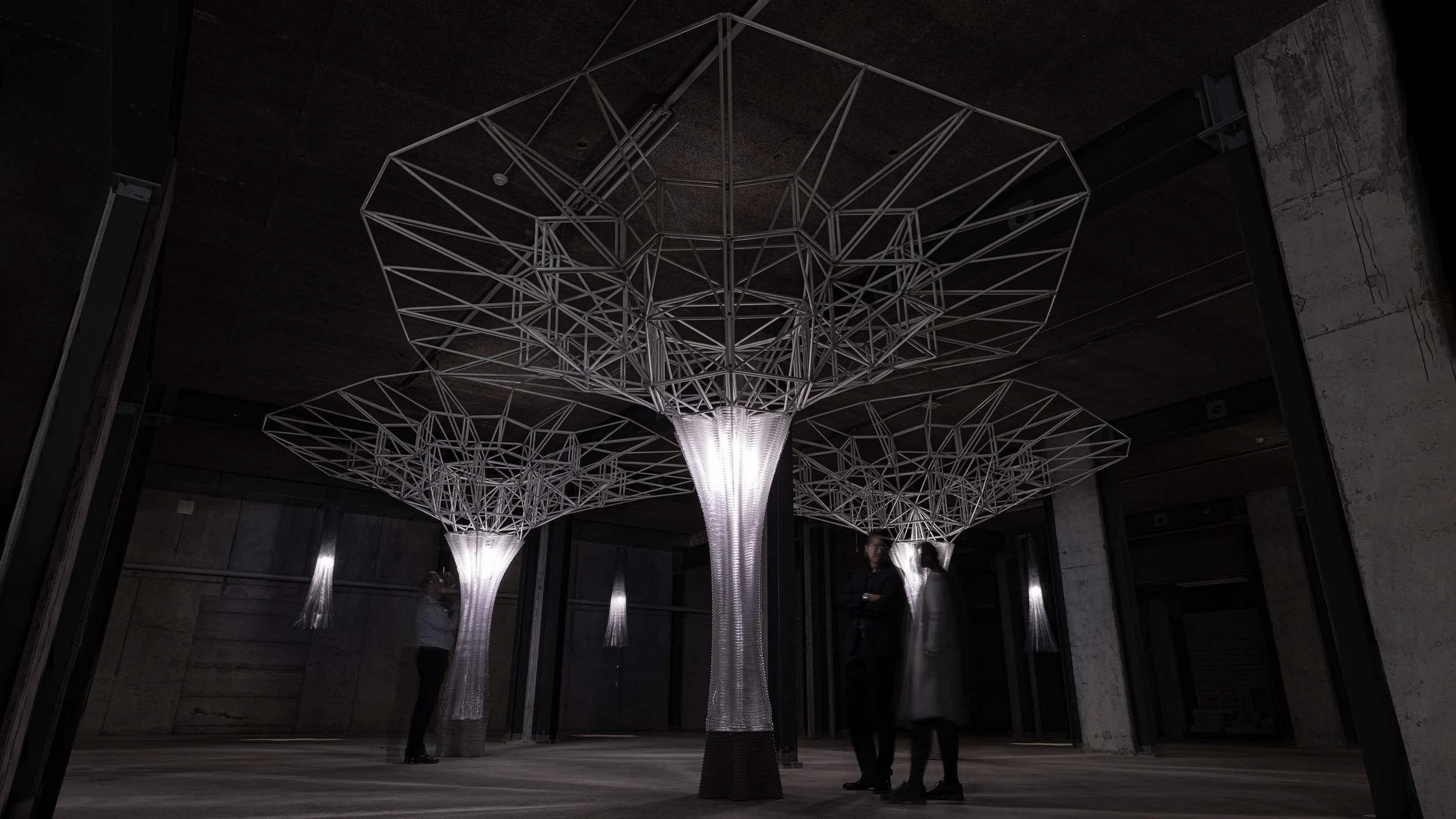
Prōtóplasto: A discrete roof-column system with hollow-core 3D printing and bespoke space frames
Fabricate 2024: Creating Resourceful Futures, UCL Press
Built demonstrator: three printed columns carrying radial space frames over 5.5 m spans with 3 m cantilevers. Tubular sections save over 85% material against conventional AM.
FACADE PERFORMANCE
3D printing facades: Design, fabrication, and assessment methods
Automation in Construction 152 (2023) 104918
Review of roughly 180 works across computational design, fabrication processes and performance assessment. Establishes that material choice sets the achievable application scale, and that no standardised design or assessment tools yet exist.
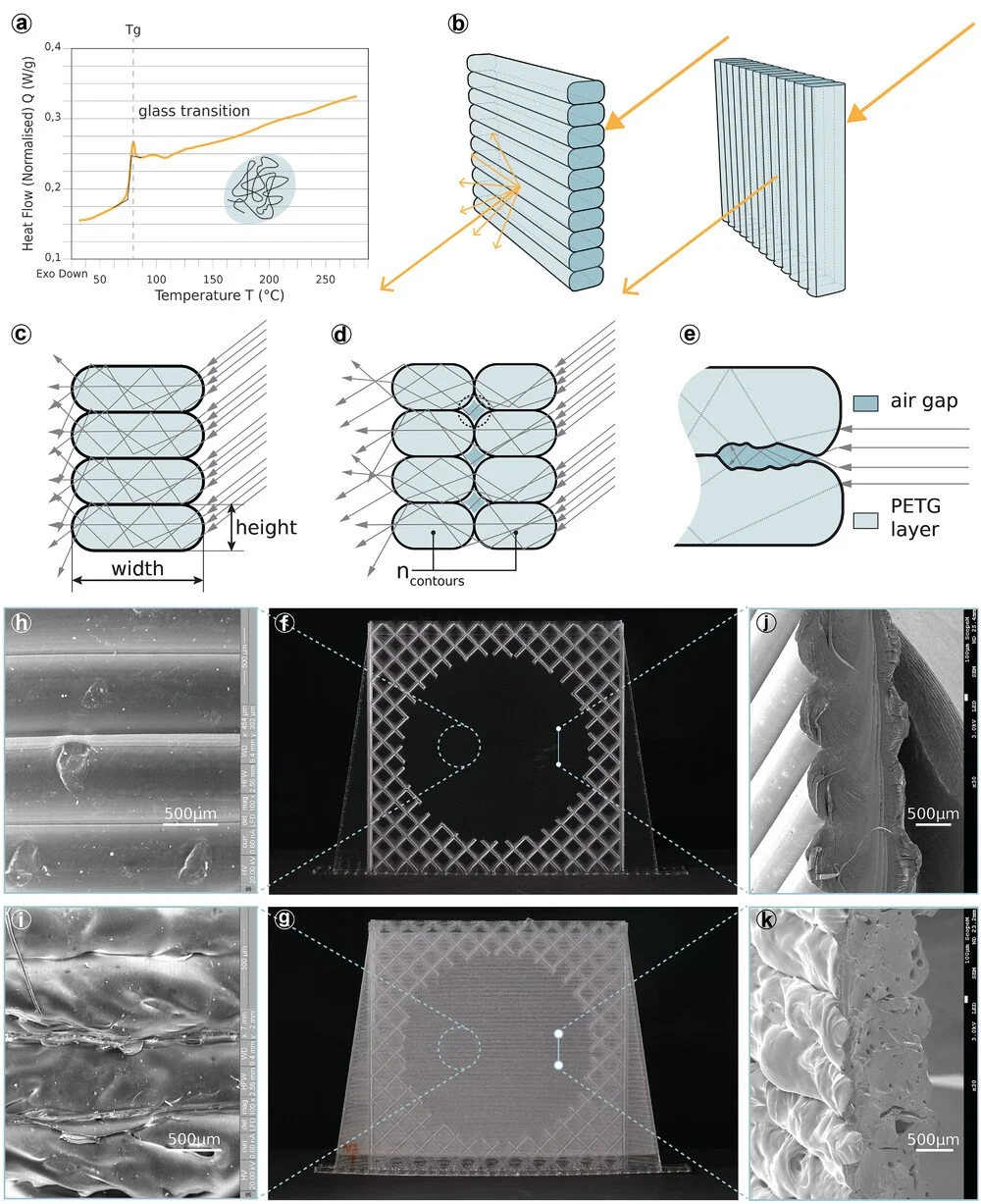
Tuning the solar performance of building facades through polymer 3D printing
Goniophotometric BSDF characterisation of 20 printed samples: contour count governs transparency, layer height governs angle-selective behaviour — enabling seasonal solar control to be set by print parameter.
Advanced Materials Technologies 8(6) (2023) 2201200
3D-PRINTED FORMWORK FOR CONCRETE
Sustainable thin-shell 3D printed formwork for concrete
Impact: Design With All Senses, Springer (2020) 487–501
Leschok, Dillenburger
Water-dissolvable (PVA/BVOH) thin-shell formwork. A 3 m column formwork weighing 8.5 kg cast approximately 220 L of concrete and carried 320 kg of standard formwork above it.
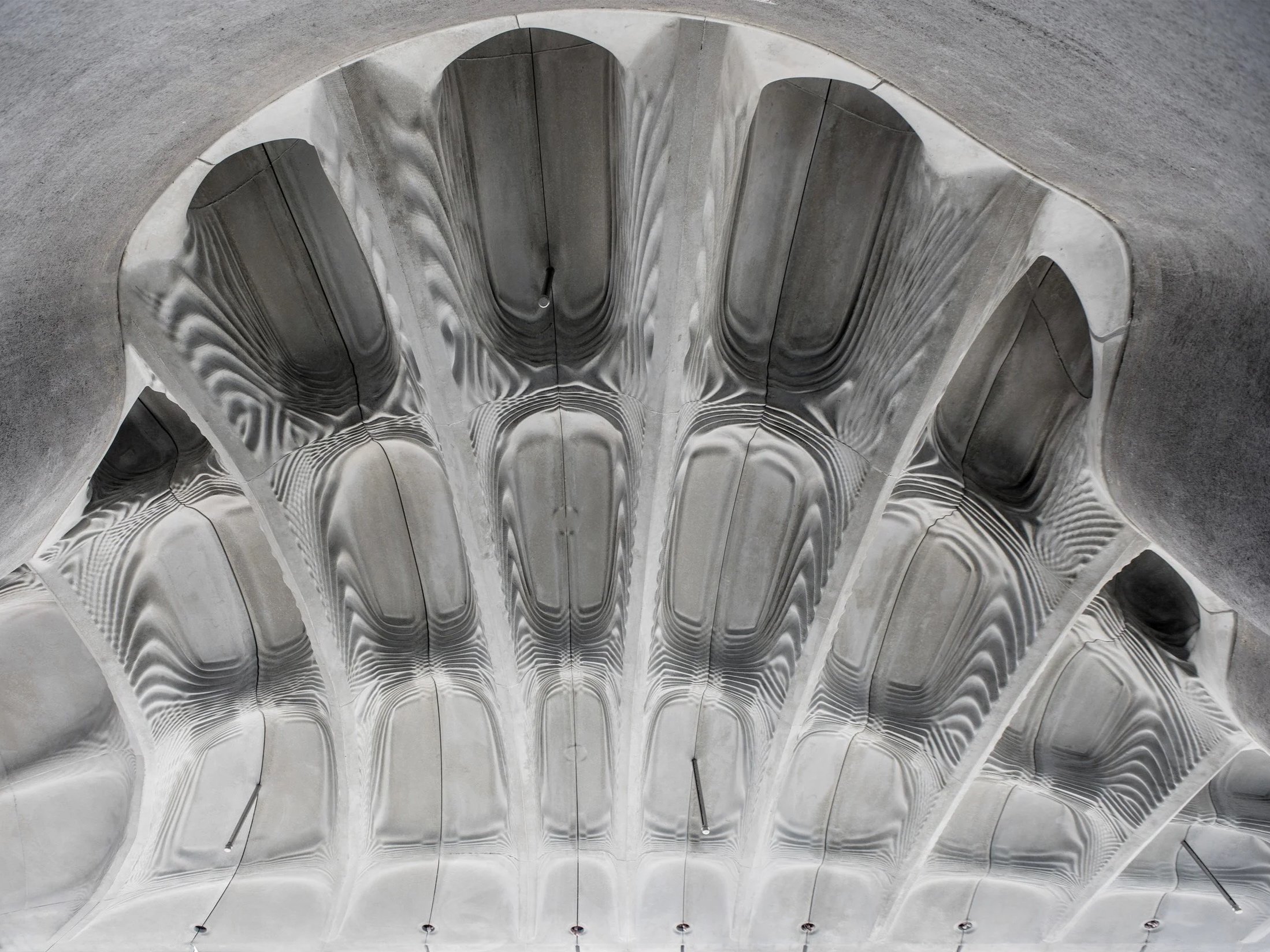
Smart Slab: Computational design and digital fabrication of a lightweight concrete slab
ACADIA 2018, 434–443
Aghaei Meibodi, Jipa, Giesecke, Shammas, Bernhard, Leschok, Graser, Dillenburger
78 m² concrete slab cast in 3D-printed formwork for DFAB HOUSE — approximately 70% lighter than a conventional slab.
LIGHTWEIGHT STRUCTURES AND BIOMATERIALS
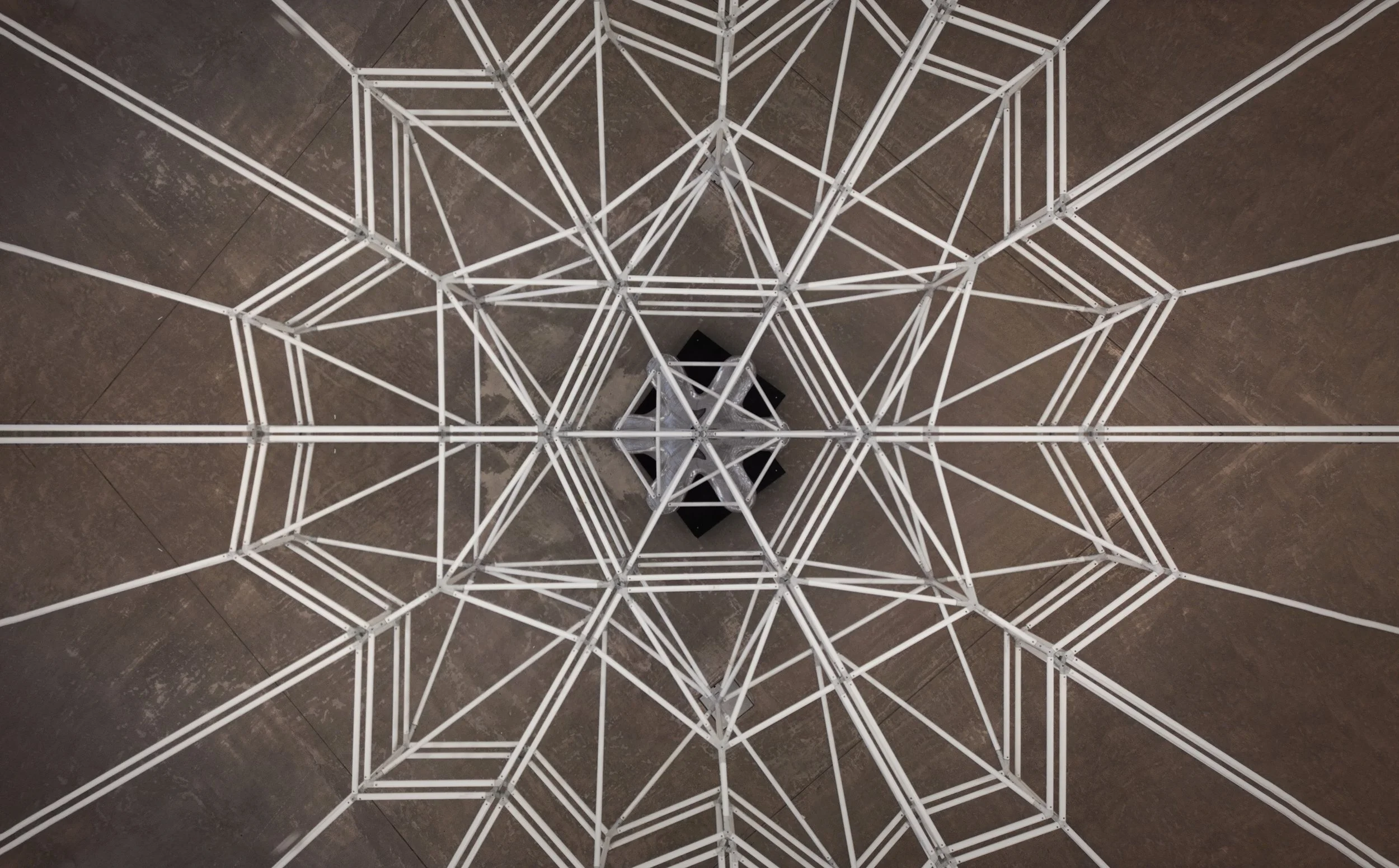
Digital Bamboo: A study on bamboo, 3D printed joints, and digitally fabricated building components for ultralight architectures
ACADIA (2022)
40 m² pavilion weighing 200 kg (5 kg/m²): 930 bamboo poles and 381 printed PA12 joints, with connection capacity established from over 100 tensile tests. Exhibited at the Venice Biennale, 2021.
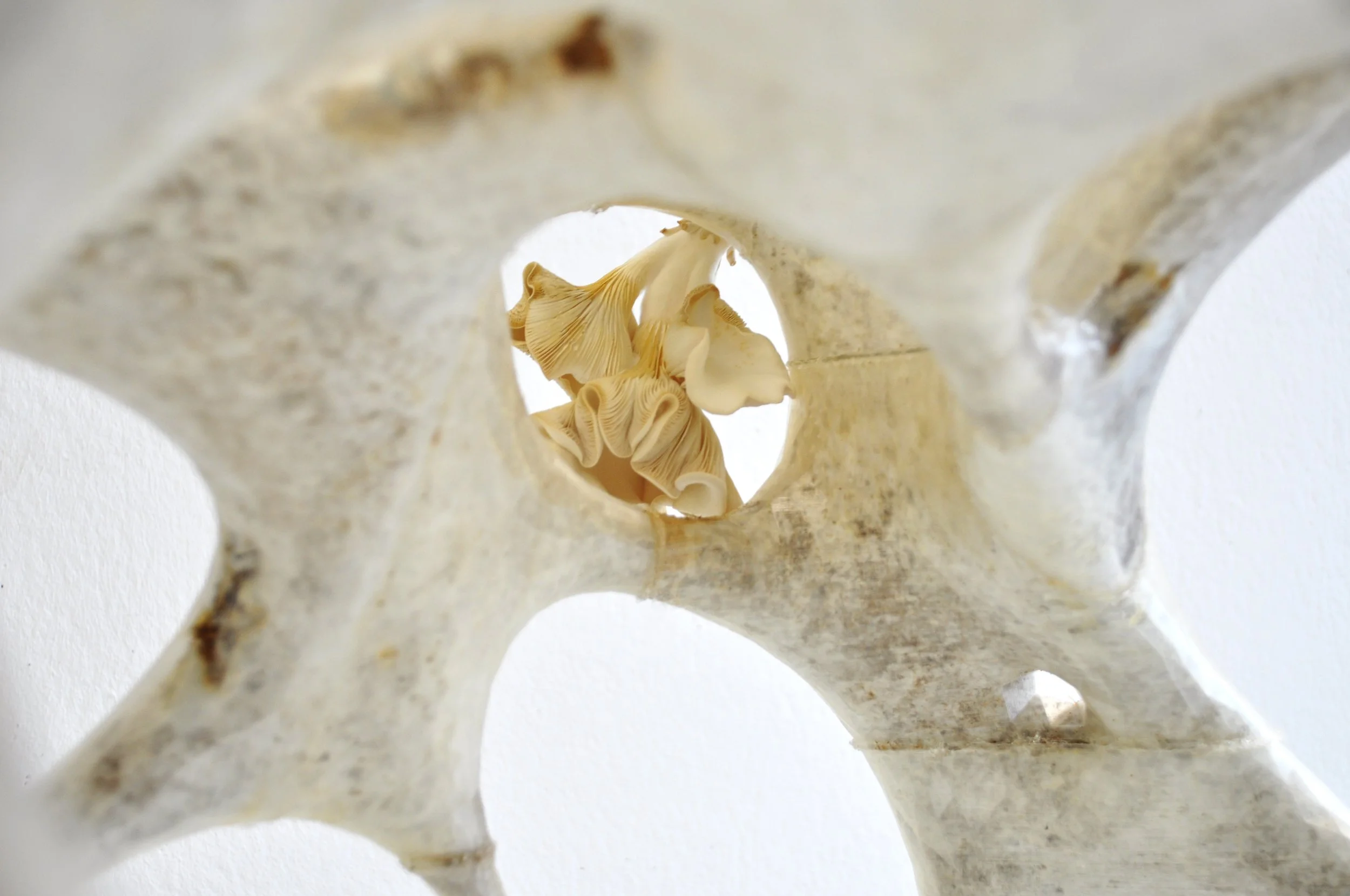
3D printed formwork for mycelium bound composite
ACADIA 2022: Hybrids & Haecceities, 356–365
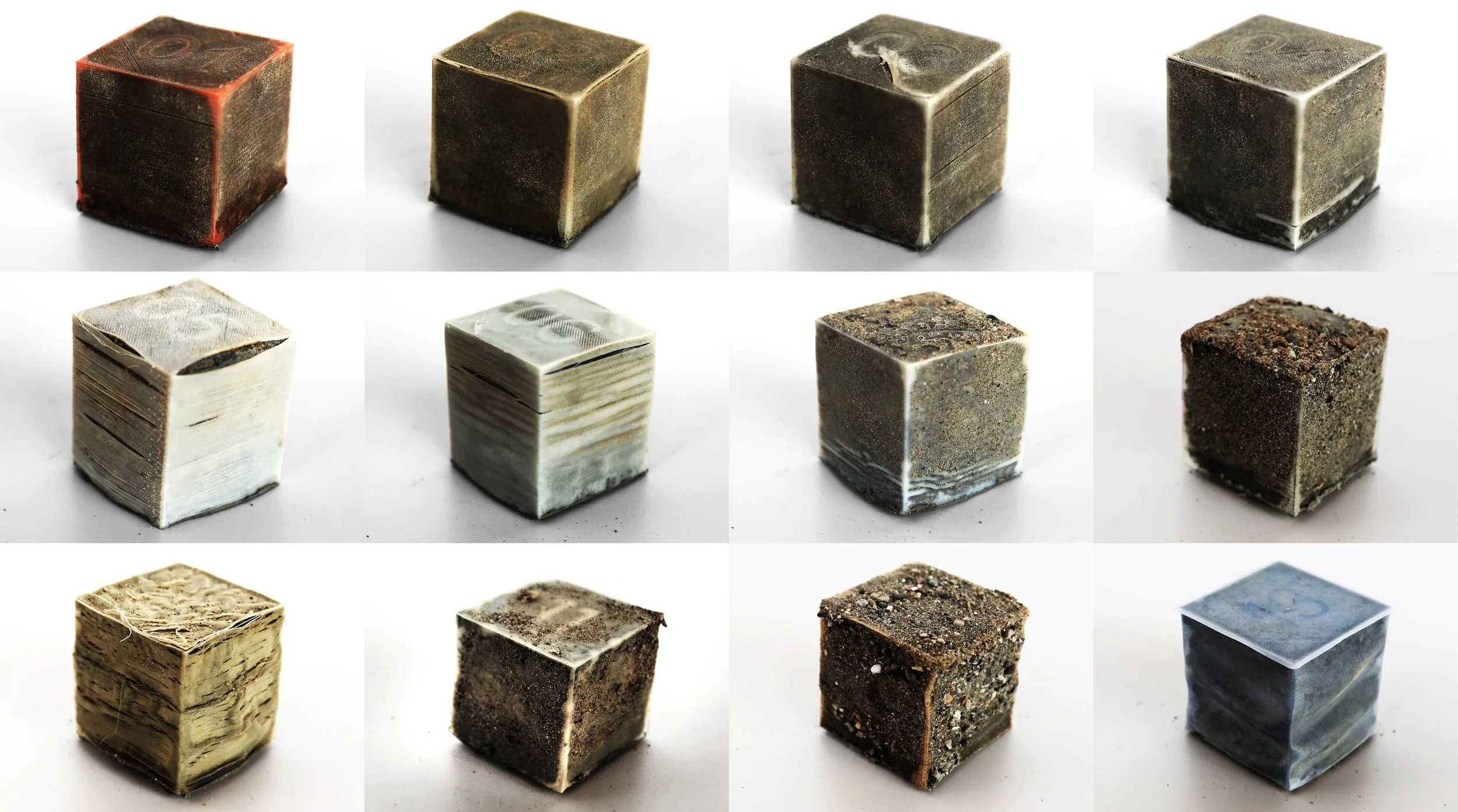
Printed formwork for growing mycelium-bound components, tested in three polymers: PLA for demountable moulds (MycoChair, 45 segments), Laywood for stay-in-place formwork the mycelium grows through, and water-soluble PVA for a 2.5 m column with walls graded from 3 to 0.8 mm that dissolve as the material grows.